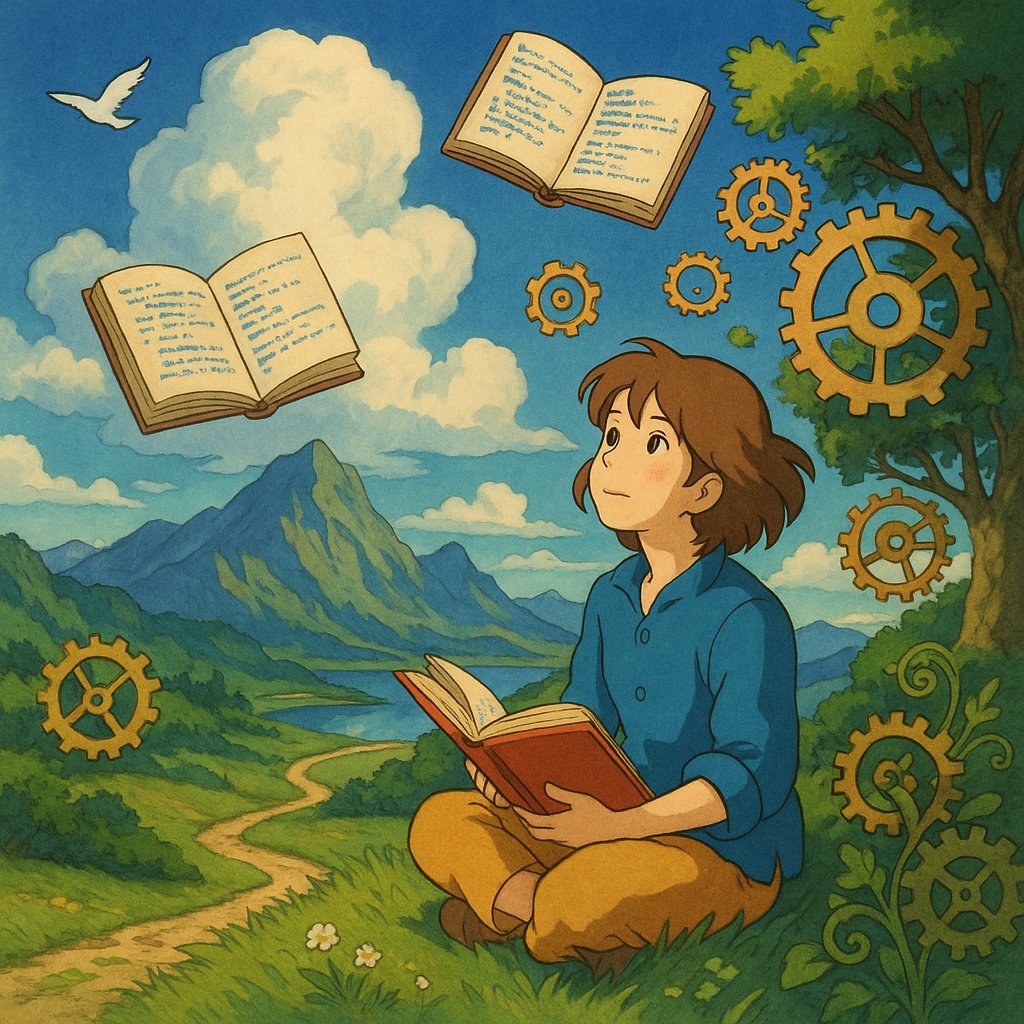
Openness to experience is a personality dimension much less known than Neuroticism or Extraversion (as a core dimension of personality). Openness to experience is the first dimension of creativity, artistic interest, and intelligence (particularly verbal intelligence) in the scientific model of the five major personality traits. Openness to experience measures interest in novelty, art, literature, abstract thinking, philosophy, as well as sensitivity to aesthetic emotions and beauty.
People with a high score in openness are those who are more open to new theories, have a multitude of different passions, some of which include art. They stand out for their unconventional, creative, intellectual, curious character, and their overflowing imagination. They enjoy hearing new and unusual opinions. 'Open' people are curious both about their internal and external worlds, and their lives are richer in experiences. They are willing to test new ideas and adopt non-conventional values. They experience both positive and negative emotions more intensely than 'closed' people. This factor has also been called Intellect in other formulations of the five-factor model. Indeed, scores in this domain are slightly correlated with education level and intelligence. Openness is particularly related to certain specific aspects of intelligence (such as divergent thinking) which contribute to creativity (McCrae, 1987). However, openness to experience is in no way equivalent to intelligence. In fact, some very intelligent people are closed to experience, while others, highly open to experience, have limited intellectual abilities. In a factorial perspective, cognitive ability measures form a sixth independent factor that can be considered outside the domain of personality in the strict sense (McCrae, 1994b).
People with a low score are conventional, traditional, and do not appreciate foreign things or things they are not familiar with. Intellectual activities leave them indifferent, and they do not like being confronted with bizarre opinions and ideas. They prefer familiar situations and perspectives over novelty, and their emotional reactions are somewhat 'muted.' While 'openness' or 'closedness' may influence the nature of psychological defenses used (McCrae & Costa, 1997a), it is not established that closedness is a generalized defensive reaction. It seems rather that 'closed' individuals simply have less extensive and less invested areas of interest.
Studies have shown that a high level of openness to experience can be just as beneficial as a lower level, depending on the task at hand. People with a high level of openness to experience typically tend to achieve better results in creative activities or research, while lower levels of openness have their advantages in fields like accounting, policing, and sales. Openness to experience is the dimension that best predicts political allegiance (conscientiousness, particularly the aspect of order, coming in second). Politically speaking, liberals are much more likely to be highly open to experience than conservatives. Men and women differ very little in openness to experience at the trait level, although there are differences at the aspect level. Openness to experience at the trait level consists of the aspects of intellect and openness.
A creative artist who constantly explores new forms of art, is open to diverse cultural influences, and seeks inspiration from various fields demonstrates high Openness to Experience.
An individual who prefers familiar activities and avoids new experiences, is reluctant to step out of their comfort zone and explore innovative ideas, reflects lower Openness to Experience.
An adventurous traveler who explores exotic destinations, immerses themselves in new cultures, and seeks unique experiences reflects high Openness to Experience.
A person who prefers familiar activities and established routines, avoids unknown situations, and clings to conventional ideas, demonstrates lower Openness to Experience.